EU Overhauls Carbon Trading System
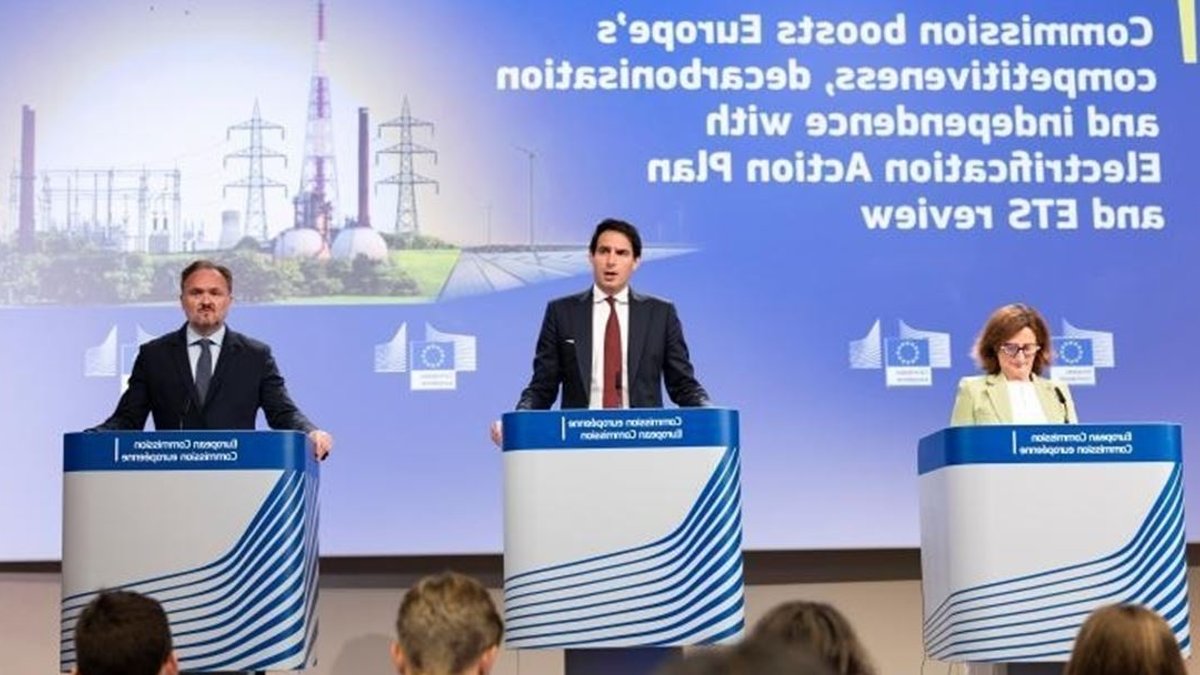
The European Commission has unveiled its plan to overhaul the EU’s carbon market, known as the Emissions Trading System (ETS). The aim is to future-proof European industry while keeping the bloc on track to cut greenhouse gas emissions 90% by 2040.
Power generators, steelmakers, chemical manufacturers, shipping companies, and airlines are all affected by the changes. The Commission proposed slowing the linear reduction factor (LRF) — the rate at which the overall cap on allowances shrinks each year.
The EU executive proposed bringing the LRF down to 3.7% between 2031 and 2035, and 1.7% from 2036. This change would prevent the overall cap on allowances from reaching zero by 2039 — as it would under the current 4.4% LRF.
Climate Commissioner Wopke Hoekstra defended the new rates as “entirely climate-law-proof.” He told reporters, “It is simply not the case that you would need to continue with the current LRF in order to reach your target.”
The expansion of the ETS to cover all departing flights to destinations within a 5,000-kilometre radius is another key proposal. This would significantly broaden the current scope, which applies only to flights within the European Economic Area, affecting the carbon market.
The change is expected to boost EU revenues. According to a study by NGO Transport & Environment, airlines avoided an estimated €8.5 billion in emissions costs last year thanks to exemptions and free allowances.
Related: EU defense strategy outdated says Kubilius
Over time, the ETS has become a source of revenue for member states. In 2025 alone, governments received €24 out of the €43 billion generated by the carbon market. Under the new proposal, member states would be required to spend at least 50% of future ETS revenues on supporting domestic industries, which they consider essential.
They face economic pressures and political turmoil. Industry calls for extending the deadline to clean up their operations have amplified, making the reform a challenging task for the Commission.
The EU’s approach to decarbonization is notable for its emphasis on gradual change. While some may argue that more drastic measures are needed, the Commission’s proposal reflects a pragmatic approach to balancing economic and environmental concerns.
The European Commission’s reform of the ETS will likely pit governments, industry, and climate advocates against one another over the pace of decarbonization and the fate of free allowances.
The proposal will now be reviewed by EU member states and the European Parliament.

EU carbon market faces major overhaul


