US-China trade war could reshape global markets
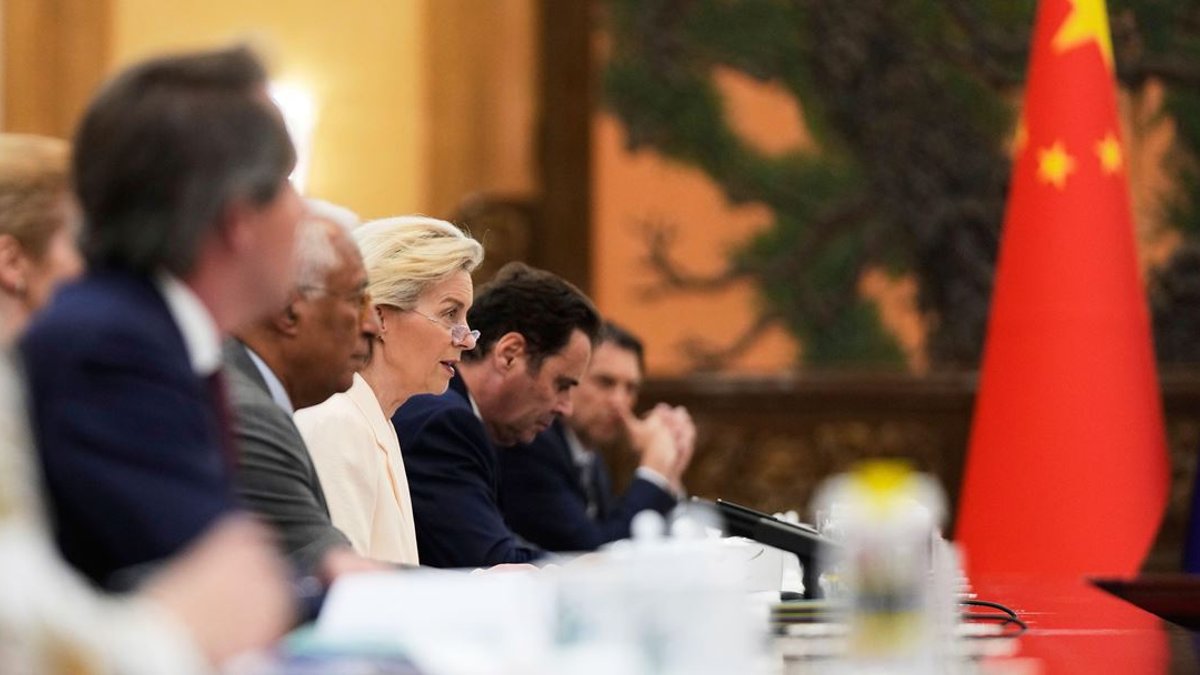
EU officials say a trade war with China is increasingly hard to avoid as the bloc’s trade deficit with the Asian powerhouse hit €359.9 billion last year.
Rising tensions and the search for leverage
Brussels has repeatedly urged Beijing to curb what officials call industrial overcapacity – a practice of dumping artificially low‑priced goods to prop up domestic demand. The European Union accuses China of heavily subsidising export‑heavy sectors such as steel, aluminium, electric vehicles and batteries, which it says undercut European producers.
During a 12‑hour meeting in June with China’s commerce minister Wang Wentao, EU trade chief Maroš Šefčovič warned that Europe’s “mounting economic frustrations” required “sufficient time to deliver tangible results” by autumn. A diplomat who asked to remain unnamed noted, “It will be interesting to see if China has gotten the message… we have no interest in a trade war.”
Related: EU Overhauls Carbon Trading System
Analysts remain doubtful that the October talks in China will produce a breakthrough. Jasper Roctus, a fellow at the Egmont Institute, said his optimism has faded, observing that “we don’t see even the slightest of the olive branches at the moment.”
Potential fallout
Most experts say any clash would be limited to a few strategic sectors, but even a narrow set of disputes could be costly for both sides. Camille Boullenois, associate director at Rhodium Group, warned that “both Beijing and Brussels have the potential to seriously hurt each other’s economy.”
For China, losing unfettered access to the EU’s €18 trillion single market would be painful, given that its growth model relies heavily on exports. The bloc, meanwhile, has begun fortifying its defenses. In September, the European Commission rolled out new steel safeguards aimed at countering China, the world’s largest steel producer.
Recent anti‑dumping duties on Chinese nylon, which the EU says threaten thousands of jobs across several member states, illustrate the growing willingness to use tariffs. Chemicals may be next, though officials could wait until after the October talks to propose new legislation.
Related: FIS launches digital corporate banking platform Asia Pacific
Europe’s “Made in Europe” agenda seeks to boost domestic manufacturing and cut reliance on Chinese supply chains. The fear remains that Beijing could retaliate by restricting exports of rare earths, a tactic witnessed last year when the EU was caught in China’s broader trade dispute with the United States.
Laia Comerma, a fellow at the Centre for Security, Diplomacy and Strategy, described China’s stance as “wait‑and‑see.”
Brussels has tried to diversify supply sources, signing non‑binding partnerships with mineral‑rich nations and pursuing a “de‑risking” strategy, but results have been modest. A consultancy report highlighted electronics, electrical equipment, shipbuilding, machinery and textiles as the sectors most exposed to Chinese supply chains.
While the EU’s Anti‑Coercion Instrument – sometimes dubbed the “trade bazooka” – lost momentum after being invoked in talks with Washington, officials are considering a new tool to address industrial overcapacity without singling out China. The proposal would allow the bloc to act on market distortions more swiftly, though it still requires a qualified majority in the Council.
Related: New Zealand PPP infrastructure project hits financial close
Negotiations continue amid uncertainty.
Rhodium Group’s Boullenois cautioned that “the worst scenario is one in which we do nothing,” describing inaction as “the most devastating in the long term for Europe.”
As the October meeting approaches, the EU appears poised to balance diplomatic pressure with the threat of sector‑specific tariffs, hoping to steer the dispute away from a broader confrontation that could reverberate across global supply chains.

EU Overhauls Carbon Trading System


