Mexico City Police Chief Claims Top Force, Cites Progress
Government reports, reviews, and appearances often fall short of the accountability expected in a democratic republic. During periods of weak opposition, they can become mere rituals of complacency and propaganda. Amidst rigid protocols and endless formalities, officials rarely make noteworthy statements, instead relying on self-praise, clichés, and mechanical applause.
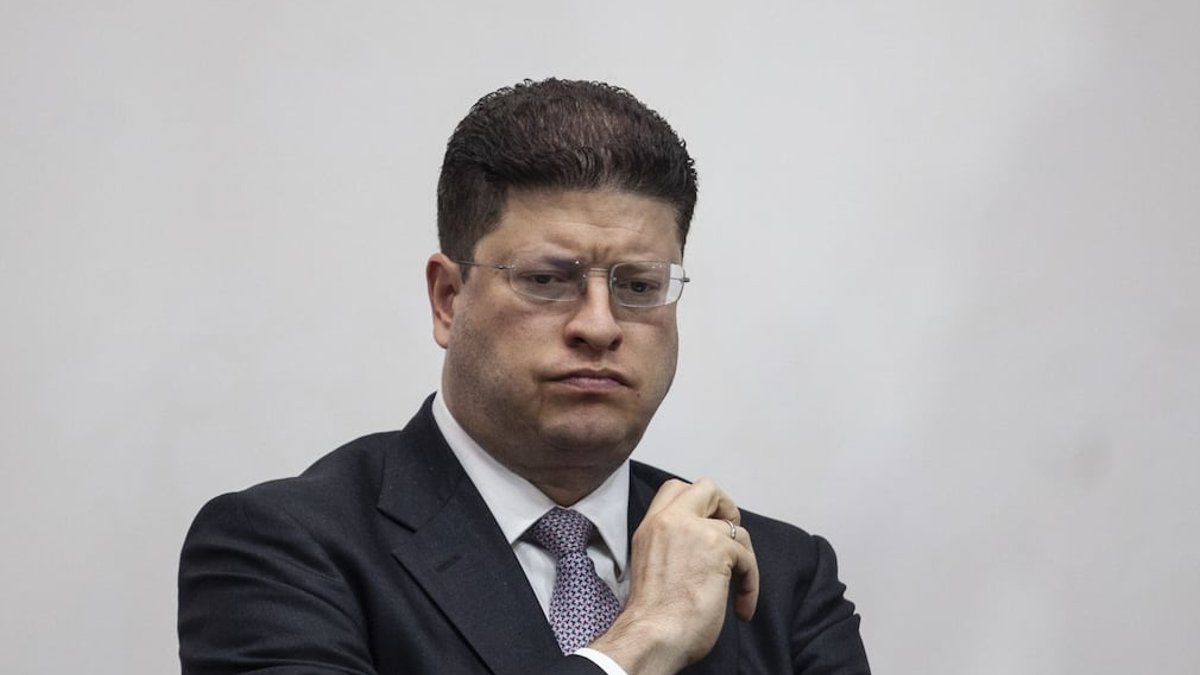
The recent appearance of Pablo Vázquez, Secretary of Citizen Security for Mexico City, briefly broke this pattern. Vázquez, who took office in September 2023 but has been part of Omar García Harfuch’s team since 2019, claimed to lead “the country’s best police force.” While debatable, this statement is not absurd, especially considering the transformation of the capital’s police force.
A progressive approach to security
During his appearance, Vázquez outlined three key priorities. First, he aims to strengthen police presence in peripheral neighborhoods, historically neglected and vulnerable to crime. Second, he seeks to ensure that every woman seeking help finds a police force and prosecutor’s office that protects and supports her, while combating impunity in gender-based violence cases, particularly femicides.
Third, he addresses two challenging criminal phenomena often overlooked: extortion and disappearances. Vázquez’s approach is progressive, avoiding the harsh policies seen in some other regions, such as those implemented by Bukele.
Results speak louder than words
Results are more important than rhetoric. One notable achievement is the reduction in perceived insecurity, as measured by INEGI surveys. Between September 2019 and September 2026, this perception dropped across all 16 Mexico City boroughs, with an average decline of over 20 percentage points. This is nearly double the 11-point drop observed in other cities, as measured by ENSU.
Read Also: Inés Gómez Mont Detained Wearing Stella McCartney Sneakers
In 2019, three boroughs—Iztapalapa, Tláhuac, and Cuauhtémoc—ranked among the most insecure nationwide. By 2026, none remained in this category. While perceived insecurity does not directly measure police quality, these improvements cannot be solely attributed to Vázquez. They are the result of a strategy initiated in 2019 and maintained across three administrations, including his own.
This progress stems from an institutional transformation that has strengthened police investigation and intelligence, improved coordination with prosecutors, and combined territorial presence with operations against criminal organizations.
A notable decline in violence
Beyond the drop in homicides, femicides are also decreasing. Between January and September 2026, 29 victims were recorded, nearly half the number from the same period in 2024. Women in Mexico City now feel more secure than they did in 2019, when they felt less safe than women nationwide. The gap in insecurity perception between women and men has also narrowed in the capital.
Vázquez’s tenure is notable for its institutional continuity. He has served across different administrations, a rarity in Mexican public security. Appointed during Sheinbaum’s government, he took office under Martí Batres and was reappointed by Clara Brugada. This continuity is encouraging in a country where each new government typically appoints its own police chief and strategy.

Inés Gómez Mont Detained Wearing Stella McCartney Sneakers


