AI drives high-yield investment shift
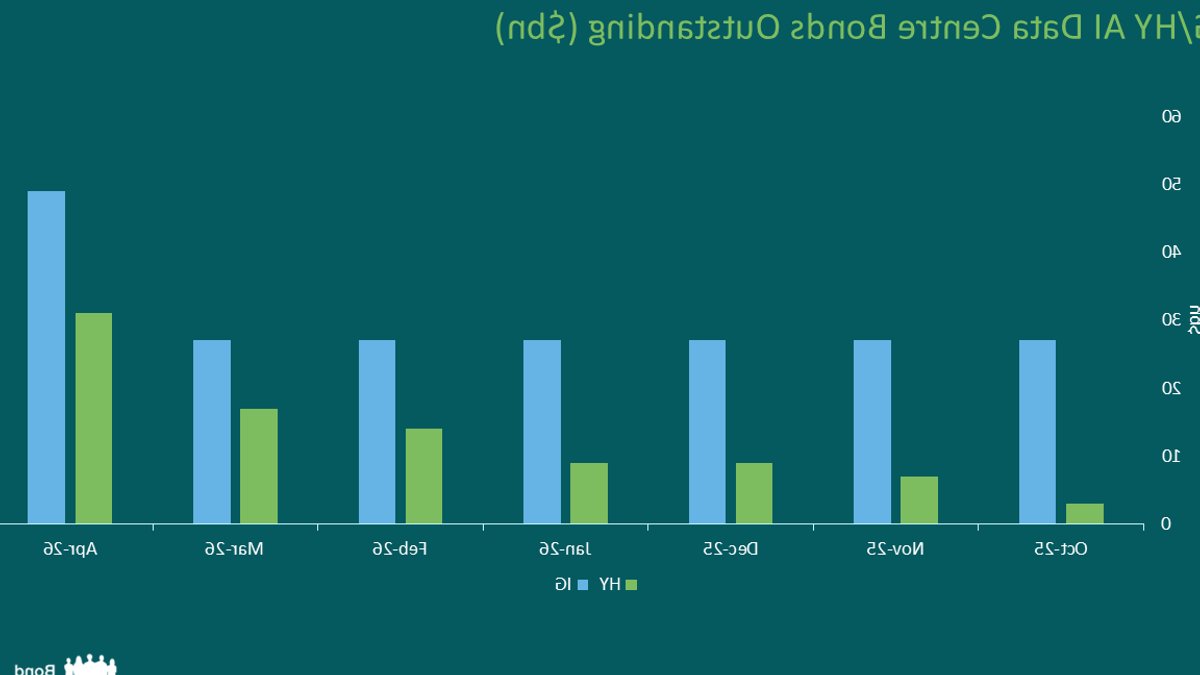
The high-yield bond market is expanding into a new area driven by demand for artificial intelligence infrastructure.
Global data center and AI development may need $5 trillion to $7 trillion in capital by 2030, including adding 122 gigawatts of power capacity. The buildout is drawing funding from public markets, private credit, governments, and asset-backed securities.
High-yield bonds fund AI expansion
Though larger markets handle most financing, high-yield bonds have become important for data center funding. Issuance in this area jumped from almost nothing a year ago to nearly $40 billion, with about $30 billion issued since January.
This growth has formed a distinct segment within high-yield debt. These bonds now make up 1.6% of the Global High Yield Bond Index and 2.6% of the U.S. version. Analysts predict AI-related high-yield issuance could reach $100 billion to $120 billion soon, raising its share to 4%–5% globally and 6%–7% in the U.S.—similar to sectors like retail and capital goods.
Related: South Korea’s growth defies bearish markets
Active managers tracking these indices can no longer overlook the sector. Its growth and higher yields force fund managers, analysts, and strategists to study both the broader trend and individual issuer risks.
The situation resembles past market booms, such as telecom in the early 2000s or energy in 2015–2017, where excitement outpaced risk evaluation. Overcapacity and unproven business models led to losses then. Some fear the same could happen now if AI demand falls short or contracts with major tenants like Nvidia, Amazon, or Microsoft collapse under pressure.
Different risks and financing models
Fifteen high-yield data center bonds now total $39 billion, excluding $6.5 billion from cloud provider CoreWeave. Most use a project-finance approach with variations.
They usually have five-year terms, a two-year non-call period, and amortizing structures. Some issuers have backing from tech companies like Google, while others operate without it. Facilities range from single sites to multi-jurisdiction projects. Some have secured power contracts, including backup power, while others are still negotiating. Lease terms, cost controls, and covenants add complexity.
Related: Finding Excellence in Microsoft Surface Repairs: Essential Tips
Supporters say compute demand is clear, and any failures would likely be absorbed by well-funded tenants. If one facility struggles, others could fill the gap. Some see these bonds as a short-term opportunity—once projects generate cash, issuers may refinance at lower rates, benefiting high-yield investors.
Others remain cautious. They warn of overbuilding, untested contracts, and the chance that AI demand is exaggerated. Avoiding the sector requires believing it’s mispriced or vulnerable. Betting on it means accepting an uncertain outlook.
The sector’s rapid growth and yields must be weighed against its risks. The high-yield market has faced this before: a new opportunity with high stakes and no clear answers.

South Korea’s growth defies bearish markets


