Parliament releases July print edition today
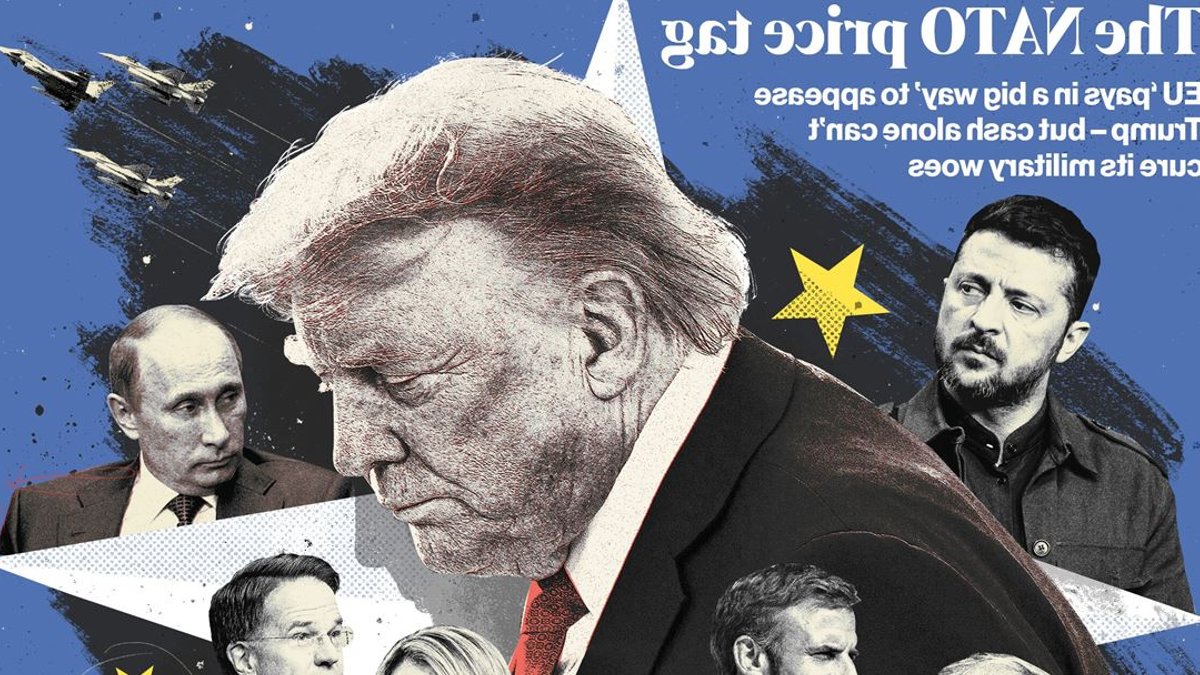
European NATO members have agreed to raise defence spending to 5 percent of gross domestic product by 2035, a pledge made at a summit in The Hague that ties the increase to a renewed U.S. commitment to the alliance’s Article 5 security guarantee.
Details of the agreement
The deal, announced last week, requires each European signatory to more than double the alliance’s previous spending target. The arrangement was described by a diplomat as “one big transatlantic bargain,” reflecting the direct link between higher national budgets and continued U.S. support for collective defence.
In exchange for the spending commitment, the United States pledged to maintain its Article 5 guarantee, which obliges members to consider an attack on one as an attack on all. The agreement does not set a uniform timeline for reaching the 5 percent level; instead, each country will chart its own path toward the 2035 goal.
Political context and challenges
The summit highlighted both the alliance’s resilience and its fragility. A planned NATO‑Ukraine Council failed to materialise, and the final communiqué omitted any reference to Russia as the aggressor in the ongoing war, signalling a shift in focus toward broader alliance cohesion.
European officials said the pact highlighted a deep imbalance in the EU‑U.S. power relationship. Across the bloc, military systems remain fragmented, and many nations still rely heavily on American equipment and strategic capabilities. This dependence persists even as the United States pivots more toward the Pacific region.
Critics note that the target, while presented as a triumph of unity, may not address underlying capability gaps. The European Union continues to face challenges in integrating defence procurement and in achieving interoperability among member‑state forces.
From a practical standpoint, the new target could strain national budgets already under pressure from inflation and other social priorities. Some governments have signaled the need for flexible implementation schedules, acknowledging that reaching the figure will require significant policy adjustments.
It is also worth noting that the agreement comes amid a broader climate of tension between the EU and the United States. EU leaders have less than a week to negotiate a trade deal with Washington, or risk a baseline 50 percent tariff on European exports to the United States. An EU official told Parliament that “tariffs in one form or another are likely here for good,” suggesting that the transatlantic trade relationship may have been fundamentally altered.
Related: EU defense strategy outdated says Kubilius
For many citizens, the impact of higher defence budgets could translate into increased taxes or reallocation of public funds. While the policy aims to bolster collective security, the immediate effect on households may be less visible than the rhetoric surrounding the pact.
In practice, the commitment may push European defence ministries to prioritize spending on existing platforms rather than pursuing new, costly projects. This could lead to a more incremental modernization of forces, focusing on upgrades and joint procurement to meet the goal without overextending fiscal limits.
Outlook and next steps
EU leaders have widely declared the summit a success, despite having to manage strong‑handed U.S. demands. The next phase will involve detailed planning at the national level to chart pathways toward the 2035 target, as well as continued diplomatic engagement on trade matters.
Analysts warn that the alliance’s future depends on whether the increased spending translates into tangible capability enhancements. The effectiveness of the pledge will be measured by how quickly member states can align their procurement strategies and integrate their forces.
Meanwhile, the broader transatlantic relationship faces uncertainty. The looming trade tariffs and the United States’ strategic shift toward the Indo‑Pacific could test the durability of the NATO framework, particularly if economic pressures drive political rifts.
As the deadline for a new trade agreement approaches, European officials remain cautious. “There’s not a realistic chance of returning to the status quo,” one insider said, highlighting the potential for lasting change in both defence and economic ties.
Defense spending in Europe is set to rise sharply.

Europe boosts defence with local tech deals


